


Как восстановить обесцвеченные поврежденные волосы: 4-Пошаговое руководство
Обесцвечивать волосы, чтобы добиться мечтательного ледяного блонда или яркого макаронного оттенка, безусловно, увлекательно., but the reality a few weeks later is often far less appealing: strands become dry and straw-like, prone to tangling, and liable to snap at the slightest touch of a comb. Add to that the regular perming, and your hair is constantly crying out for help.
If you are wondering how to repair bleached damaged hair at home without spending hundreds of dollars at a luxury salon every week, you are in the right place.
While severe structural damage cannot be completely “cured” (since hair is non-living tissue), the right at-home care routine can significantly rebuild your hair’s moisture barrier, smooth down raised cuticles, and restore elasticity.
This science-backed, step-by-step emergency guide will help you breathe new life into your bleached and damaged hair.
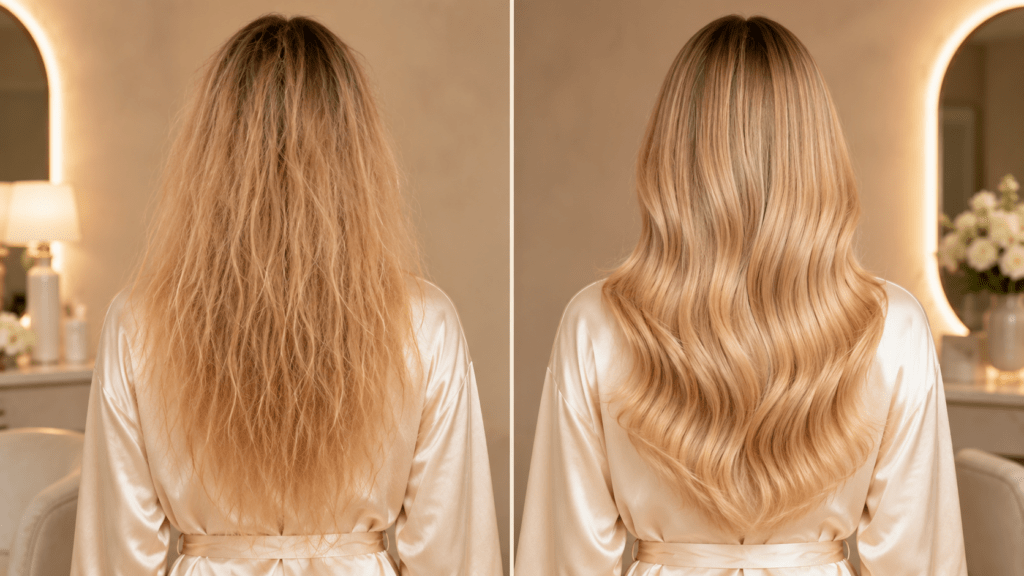
What Happens When You Bleach and Perm Hair?
To repair damaged hair, you first need to understand exactly how the bleaching process impacts the hair strands:
- Destroys the protective lipid layer: Bleaching agents dissolve the natural fatty acid layer (18-MEA), which is crucial for giving healthy hair its natural shine and hydrophobic (water-repellent) protection.
- Forces cuticles open: Chemical reactions force the hair’s outer protective scales (cuticles) to open so that melanin can be dissolved. Once lifted, these cuticles struggle to lie flat and close again, leading to increased porosity and leaving the hair extremely dry and frizzy.
- Breaks down keratin bonds: Bleaching weakens the disulfide bonds within the hair—the very bonds that maintain its strength and elasticity. When combined with high-heat styling tools like curling irons or straighteners, the hair becomes fragile and prone to breakage; strands may even stretch like rubber before snapping.
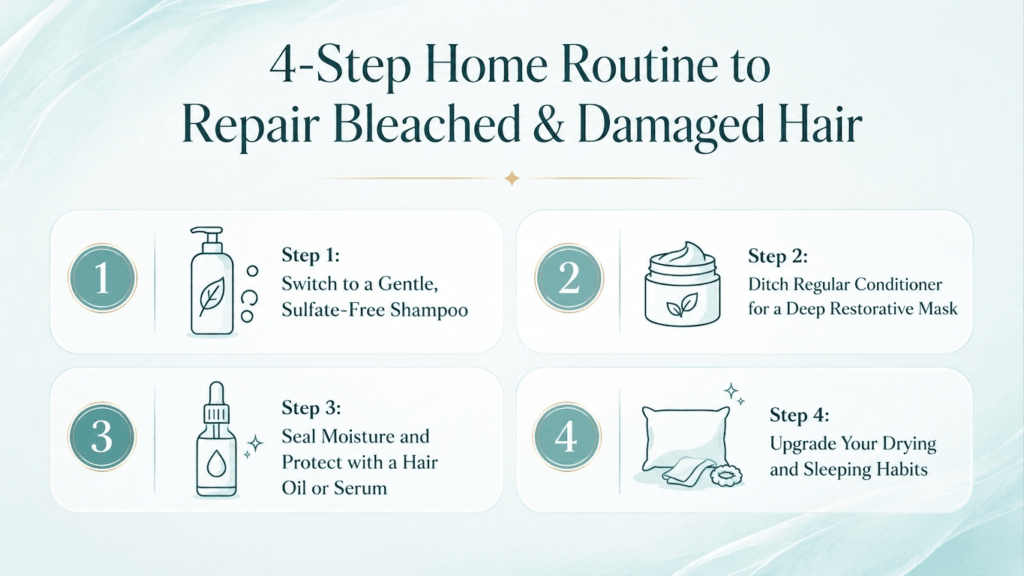
4-Step Home Routine to Repair Bleached & Damaged Hair
To repair bleached and dyed hair, the usual simple washing and conditioning routine is far from enough. You need a regimen specifically designed to cleanse gently, deeply hydrate, and seal the hair cuticles.
Шаг 1: Switch to a Gentle, Sulfate-Free Shampoo
Жесткие сульфаты (such as SLS or SLES) strip away the scalp’s natural oils, causing bleached or dyed hair to become even drier.
-
How to use: Limit washing to 2–3 times a week. Use warm or cool water and apply shampoo only to the scalp. Allow the lather to flow naturally over the ends to cleanse them, avoiding vigorous rubbing of the hair tips.
-
Shopping tip: Look for nourishing, sulfate-free shampoos formulated with gentle plant-based surfactants and scalp-soothing ingredients.
💡 Product Spotlight: Батана Шампунь & Кондиционер — Featuring a gentle, sulfate-free formula, it cleanses while retaining essential moisture, helping to smooth raised hair cuticles caused by bleaching or dyeing and keeping hair hydrated.
Шаг 2: Ditch Regular Conditioner for a Deep Restorative Mask
Regular conditioners offer only temporary surface smoothness. Bleached or dyed hair requires nutrients that can penetrate deeply, delivering moisture and plant proteins directly to the hair’s core (the cortex).
-
How to use: Use an intensive hair mask once or twice a week instead of your daily conditioner. Before applying, blot excess water from your hair with a microfiber towel, then apply the mask from the mid-lengths to the ends. Leave it on for 10–15 minutes, then rinse thoroughly with cool water.
-
Balancing protein and moisture: Too much protein can make hair stiff, while too little can leave it limp and mushy. Choose a mask with a balanced formula rich in plant oils (such as argan or jojoba oil) and micro-proteins.
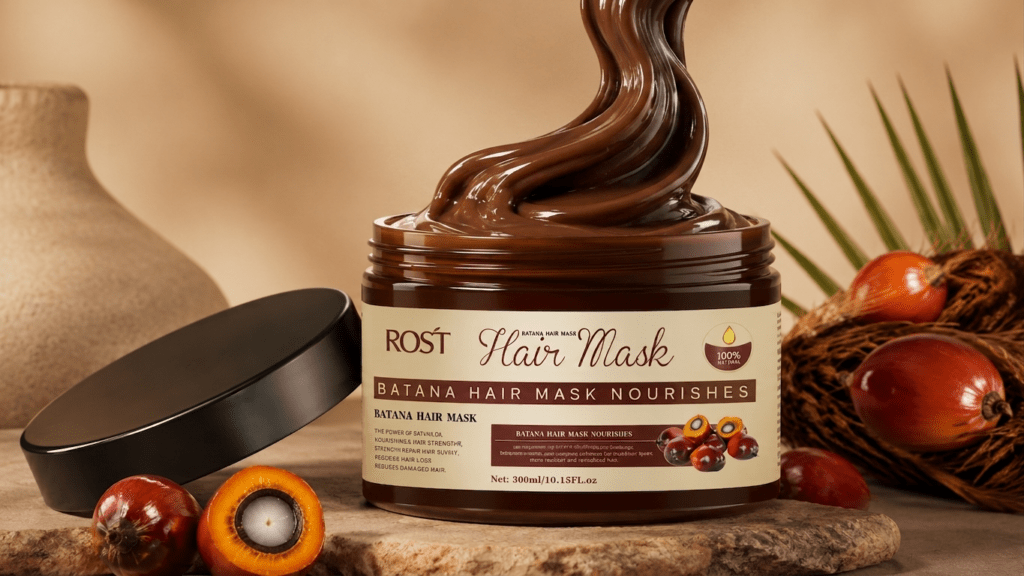
💡 Product Spotlight: Маска для волос Батана — Specially designed for chemically treated and porous, поврежденные волосы, this nourishing mask deeply hydrates and restores hair elasticity in under 10 minutes.
Шаг 3: Seal Moisture and Protect with a Hair Oil or Serum
Bleached and dyed hair lacks a natural lipid barrier, making it extremely easy for moisture to be lost after shampooing. You need a lightweight hair oil to seal in moisture and create a protective layer against environmental humidity and heat damage.
-
How to use: Before blow-drying, apply 1–2 drops of hair oil to damp hair, focusing on dry ends. For daily maintenance, press a small amount (about half a drop) onto dry ends to tame frizz and instantly add shine.
-
Heat Protection: If you plan to use a hair dryer, ensure your leave-in serum or hair oil offers heat protection.
💡 Product Spotlight: Масло для волос Батана — Formulated with lightweight, non-greasy botanical oils, it instantly seals split ends and gives hair a salon-quality, glossy finish.
Шаг 4: Upgrade Your Drying and Sleeping Habits
While chemical treatments weaken hair, mechanical friction is the primary culprit behind breakage.
-
Switch your towel: Ditch rough terry cloth towels in favor of a microfiber towel or an old cotton T-shirt; gently blot—don’t rub—to absorb excess moisture.
-
Use a silk or satin pillowcase: Cotton pillowcases absorb moisture from your hair and create friction as you toss and turn. Silk pillowcases minimize friction, keeping your hair smooth and sleek throughout the night.
Do’s and Don’ts for Bleached Hair Care
| Do This ✅ | Avoid This ❌ |
| Wash hair with cool or lukewarm water | Wash hair with boiling hot water |
| Use a heat-protectant product before blow-drying | Use a flat iron directly on unprotected hair |
| Use a wide-tooth comb starting from the ends | Aggressively brush wet hair from the roots down |
| Use a deep-nourishing hair mask weekly | Use a strong, deep-cleansing shampoo daily |
Уход за волосами: Consistency Is Key
Repairing hair damaged by bleaching, раскраска, or heat styling doesn’t happen overnight; consistency is the secret to success. Simply by switching to a gentle, безсульфатный шампунь, committing to a weekly deep-conditioning routine, and minimizing heat exposure, you will notice your hair becoming softer, stronger, and more resilient in just a few weeks.
Ready to embark on your hair repair journey? Связаться с нами—we specialize in hair care products designed specifically for chemically treated and heat-damaged hair, aiming to restore its softness, светить, сила, and vitality.
Часто задаваемые вопросы (Часто задаваемые вопросы)
1. Can bleached hair be fully repaired?
While it is biologically impossible to “revive” hair strands that have lost their vitality, you can repair and strengthen the hair shaft—improving both appearance and texture—through protein treatments, deeply hydrating hair masks, and sealing hair oils. This helps prevent further breakage while waiting for healthy hair to grow in from the roots.
2. How often should I wash hair damaged by bleaching?
It is recommended to wash your hair 2 к 3 times a week. Washing too frequently strips away natural oils, which exacerbates dryness and causes color fading.
3. Which is more important for damaged hair: protein or moisture?
Bleached hair needs both. Protein reinforces the damaged structure of the hair strands, while moisture restores softness and elasticity. Using products that address both needs yields the best results.
- What Happens When You Bleach and Perm Hair?
- 4-Step Home Routine to Repair Bleached & Damaged Hair
- Шаг 1: Switch to a Gentle, Sulfate-Free Shampoo
- Шаг 2: Ditch Regular Conditioner for a Deep Restorative Mask
- Шаг 3: Seal Moisture and Protect with a Hair Oil or Serum
Готовы запустить линию по уходу за волосами под собственной торговой маркой?
Пользовательские формулы, поддержка упаковки, контроль качества и экспортный сервис — все от одного опытного производителя.
