


Cómo reparar el cabello dañado y decolorado: 4-Step Guide
Decolorar tu cabello para lograr un tono rubio helado de ensueño o un tono macarrón vibrante es ciertamente emocionante, pero la realidad unas semanas después suele ser mucho menos atractiva: las hebras se vuelven secas y pajizas, propenso a enredarse, y propenso a romperse al menor toque de un peine. Añade a eso la permanente regular., y tu cabello esta constantemente pidiendo ayuda.
Si te estas preguntando Cómo reparar el cabello dañado y decolorado en casa. sin gastar cientos de dólares en un salón de lujo cada semana, estás en el lugar correcto.
Si bien los daños estructurales graves no pueden repararse por completo “curado” (ya que el cabello es un tejido no vivo), La rutina adecuada de cuidado en el hogar puede reconstruir significativamente la barrera de humedad de tu cabello., suavizar las cutículas elevadas, y restaurar la elasticidad.
Esta respaldada por la ciencia, La guía de emergencia paso a paso te ayudará a darle nueva vida a tu cabello decolorado y dañado..
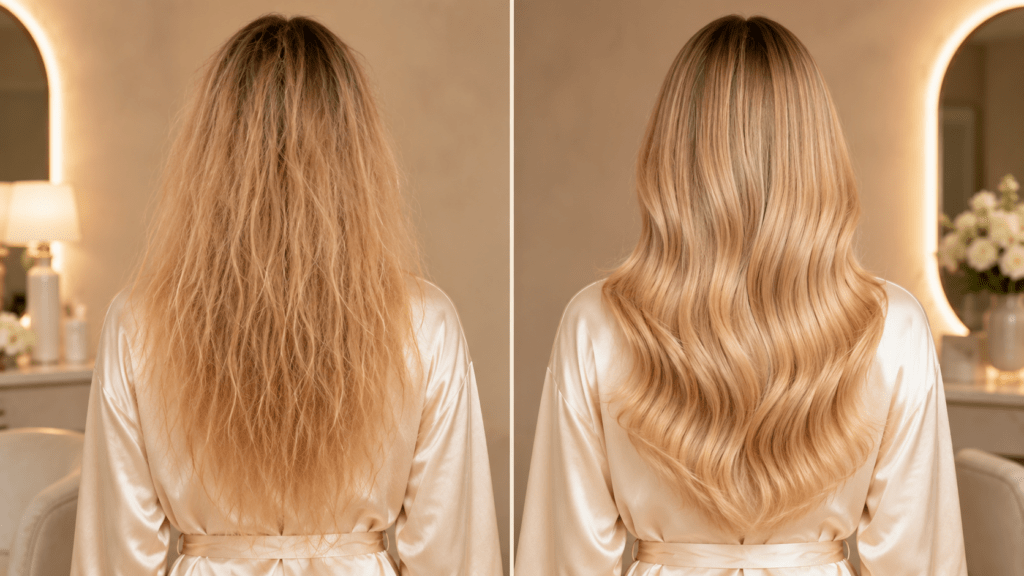
¿Qué sucede cuando decoloras y haces permanente el cabello??
Para reparar el cabello dañado, Primero debes entender exactamente cómo el proceso de decoloración afecta las hebras del cabello.:
- Destruye la capa lipídica protectora.: Los agentes blanqueadores disuelven la capa natural de ácidos grasos. (18-COSA), Lo cual es crucial para darle al cabello sano su brillo natural e hidrofóbico. (hidrófugo) protección.
- Fuerza la apertura de las cutículas: Las reacciones químicas fuerzan las escamas protectoras externas del cabello. (cutículas) abrirse para que la melanina pueda disolverse. Una vez levantado, estas cutículas luchan por quedar planas y cerrarse nuevamente, lo que aumenta la porosidad y deja el cabello extremadamente seco y encrespado.
- Rompe los enlaces de queratina.: La decoloración debilita los enlaces disulfuro dentro del cabello, los mismos enlaces que mantienen su fuerza y elasticidad.. Cuando se combina con herramientas de peinado de alta temperatura como rizadores o planchas, el cabello se vuelve frágil y propenso a romperse; Las hebras pueden incluso estirarse como goma antes de romperse..
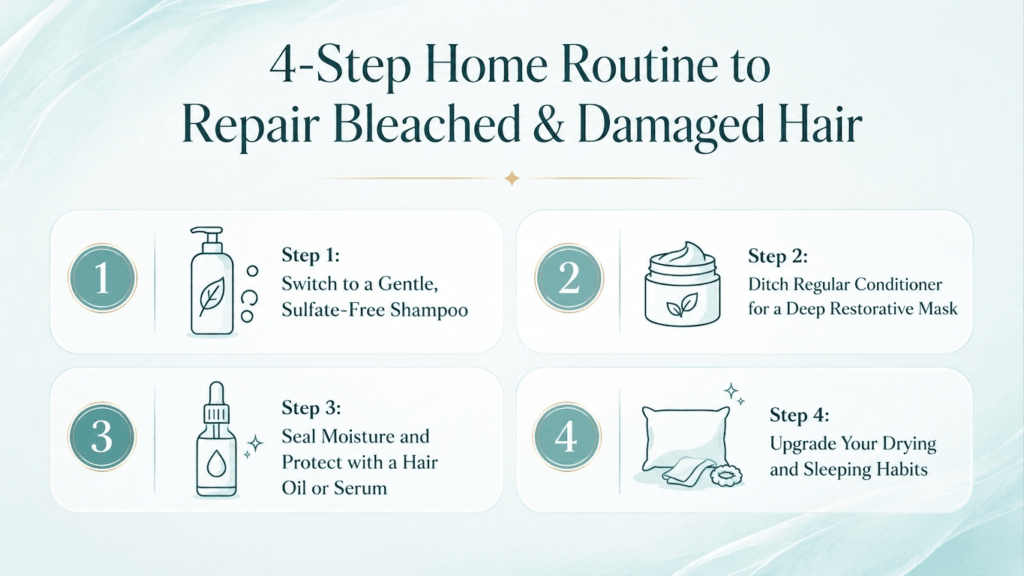
4-Paso a casa Rutina para reparar decoloraciones & Cabello Dañado
Para reparar el cabello decolorado y teñido, la sencilla rutina habitual de lavado y acondicionamiento está lejos de ser suficiente. Necesita un régimen diseñado específicamente para limpiar suavemente, hidratar profundamente, y sellar las cutículas del cabello.
Paso 1: Cambie a un suave, Champú sin sulfatos
Sulfatos fuertes (como SLS o SLES) eliminar los aceites naturales del cuero cabelludo, causando que el cabello decolorado o teñido se vuelva aún más seco.
-
como usar: Limite el lavado a 2 o 3 veces por semana.. Use agua tibia o fría y aplique champú solo en el cuero cabelludo.. Deje que la espuma fluya naturalmente sobre las puntas para limpiarlas., evitando frotar vigorosamente las puntas del cabello.
-
Consejo de compras: buscar nutritivo, Champús sin sulfato formulados con tensioactivos suaves de origen vegetal e ingredientes calmantes para el cuero cabelludo..
💡 Producto destacado: Champú Bataña & Acondicionador — Con un suave, fórmula sin sulfato, Limpia mientras retiene la humedad esencial., Ayuda a suavizar las cutículas del cabello levantadas causadas por la decoloración o el teñido y a mantener el cabello hidratado..
Paso 2: Deshazte del acondicionador regular y opta por una mascarilla reparadora profunda
Los acondicionadores regulares ofrecen solo una suavidad superficial temporal.. El cabello decolorado o teñido requiere nutrientes que puedan penetrar profundamente, entregando humedad y proteínas vegetales directamente al núcleo del cabello (la corteza).
-
como usar: Utilice una mascarilla capilar intensiva una o dos veces por semana en lugar de su acondicionador diario.. Antes de aplicar, Seca el exceso de agua de tu cabello con una toalla de microfibra., luego aplicar la mascarilla desde la mitad del largo hasta las puntas. Déjalo actuar durante 10 a 15 minutos., luego enjuague bien con agua fría.
-
Equilibrio de proteínas y humedad: Demasiada proteína puede endurecer el cabello, mientras que muy poco puede dejarlo flácido y blando. Elige una mascarilla con una fórmula equilibrada rica en aceites vegetales. (como aceite de argán o jojoba) y microproteínas.
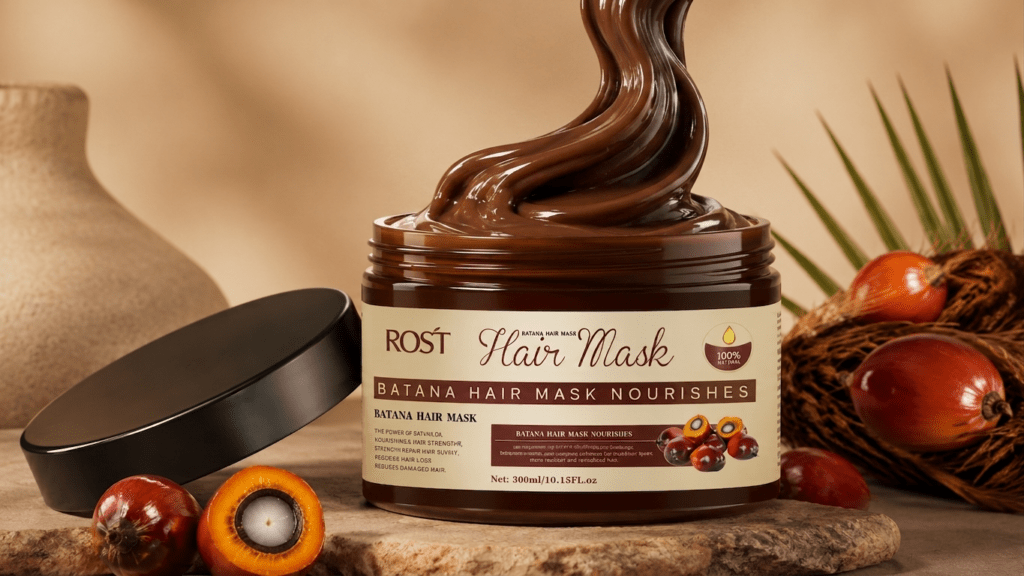
💡 Producto destacado: Mascarilla Capilar Batana — Especialmente diseñado para superficies porosas y tratadas químicamente., cabello dañado, esta mascarilla nutritiva hidrata profundamente y restaura la elasticidad del cabello en 10 minutos.
Paso 3: Sella la humedad y protege con un aceite o suero para el cabello
El cabello decolorado y teñido carece de una barrera lipídica natural, haciendo que sea extremadamente fácil perder humedad después del champú. Necesitas un aceite capilar liviano para sellar la humedad y crear una capa protectora contra la humedad ambiental y el daño por calor..
-
como usar: Antes del secador, aplique 1 o 2 gotas de aceite para el cabello sobre el cabello húmedo, centrándose en las puntas secas. Para mantenimiento diario, presione una pequeña cantidad (aproximadamente media gota) sobre las puntas secas para controlar el frizz y agregar brillo al instante.
-
Protección contra el calor: Si planeas usar un secador de pelo, asegúrese de que su suero sin enjuague o aceite para el cabello ofrezca protección contra el calor.
💡 Producto destacado: Aceite Capilar Batana — Formulado con peso ligero, aceites botánicos no grasos, Sella instantáneamente las puntas abiertas y le da al cabello una calidad de salón., acabado brillante.
Paso 4: Mejore sus hábitos de secado y sueño
Mientras que los tratamientos químicos debilitan el cabello, La fricción mecánica es el principal culpable de la rotura..
-
cambia tu toalla: Deshazte de las toallas de felpa ásperas en favor de una toalla de microfibra o una camiseta vieja de algodón; Seque suavemente, no frote, para absorber el exceso de humedad..
-
Utilice una funda de almohada de seda o satén.: Las fundas de almohada de algodón absorben la humedad de tu cabello y crean fricción cuando das vueltas y vueltas.. Las fundas de almohada de seda minimizan la fricción, mantener tu cabello suave y elegante durante toda la noche.
Lo que se debe y no se debe hacer en el cuidado del cabello decolorado
| Haz esto ✅ | Evite esto ❌ |
| Lavar el cabello con agua fría o tibia. | Lavar el cabello con agua hirviendo |
| Utilice un producto protector del calor antes de secarse con secador. | Utilice una plancha directamente sobre el cabello desprotegido. |
| Utilice un peine de dientes anchos empezando por las puntas. | Cepilla agresivamente el cabello mojado desde la raíz hacia abajo. |
| Utilice una mascarilla capilar de nutrición profunda semanalmente | Utilice un fuerte, champú de limpieza profunda diaria |
cuidado del cabello: La consistencia es clave
Reparar el cabello dañado por la decoloración, colorante, o el peinado con calor no ocurre de la noche a la mañana; la constancia es el secreto del éxito. Simplemente cambiando a un suave, champú sin sulfatos, comprometerse con una rutina semanal de acondicionamiento profundo, y minimizar la exposición al calor, notarás que tu cabello se vuelve más suave, más fuerte, y más resiliente en tan solo unas semanas.
Listo para embarcarse en su viaje de reparación del cabello? Contáctenos—nos especializamos en productos para el cuidado del cabello diseñados específicamente para cabello tratado químicamente y dañado por el calor, con el objetivo de restaurar su suavidad, brillar, fortaleza, y vitalidad.
Preguntas frecuentes (Preguntas frecuentes)
1. ¿Se puede reparar completamente el cabello decolorado??
Si bien es biológicamente imposible “reanimar” Mechones de cabello que han perdido su vitalidad., Puedes reparar y fortalecer el tallo del cabello, mejorando tanto la apariencia como la textura, mediante tratamientos con proteínas., mascarillas capilares profundamente hidratantes, y sellar aceites para el cabello. Esto ayuda a prevenir una mayor rotura mientras se espera que crezca cabello sano desde las raíces..
2. ¿Con qué frecuencia debo lavar el cabello dañado por la decoloración??
Se recomienda lavarse el cabello. 2 a 3 veces a la semana. Lavarse con demasiada frecuencia elimina los aceites naturales, lo que agrava la sequedad y provoca la decoloración.
3. ¿Qué es más importante para el cabello dañado?: proteína o humedad?
El cabello decolorado necesita ambos. La proteína refuerza la estructura dañada de las hebras del cabello., mientras que la humedad restaura la suavidad y elasticidad. El uso de productos que abordan ambas necesidades produce los mejores resultados..
- ¿Qué sucede cuando decoloras y haces permanente el cabello??
- 4-Paso a casa Rutina para reparar decoloraciones & Cabello Dañado
- Paso 1: Cambie a un suave, Champú sin sulfatos
- Paso 2: Deshazte del acondicionador regular y opta por una mascarilla reparadora profunda
- Paso 3: Sella la humedad y protege con un aceite o suero para el cabello
Listo para lanzar su línea privada de cuidado del cabello?
Fórmulas personalizadas, soporte de embalaje, control de calidad y servicio de exportación, todo de un solo fabricante experimentado.
