


Масло для тела против массажного масла: Найдите подходящее масло для вашего бренда
Предположим, вы хотите запустить продукт на основе нефти, но какой из них выбрать?? Масло для тела? Или массажное масло? Хотя бутылки могут выглядеть одинаково, их использование совершенно разное.
Понимание разницы между масло для тела и массажное масло это не просто полезно — это важно для любого бренда, разрабатывающего линию по уходу за телом.. Масло для тела против массажного масла может иметь один и тот же базовый формат, но они созданы для разных моментов, разные пользователи, и разные ожидания. Вот что вам нужно знать, прежде чем сформулировать.
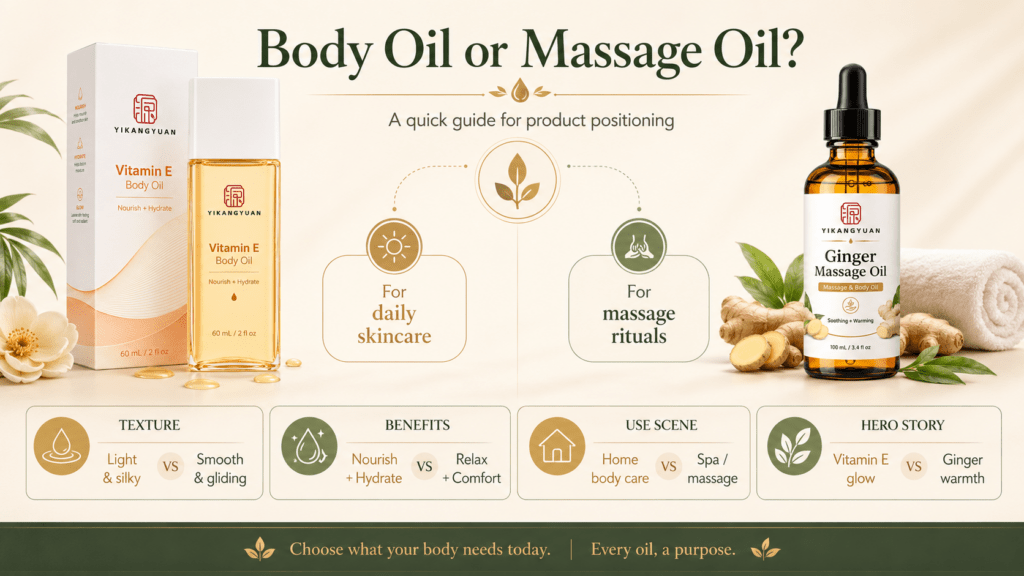
Что такое масло для тела?
Масло для тела – это средство для ежедневного ухода за кожей. Люди покупают его, чтобы сделать кожу мягче., чувствовать себя лучше после душа, и выглядеть лучше. Его следует использовать регулярно — после душа., перед сном, или всякий раз, когда кожа нуждается в повышении влажности.
Масла для тела обычно имеют легкая и средняя текстура и поглощать в стабильном темпе. Они сосредоточены на здоровье кожи: гидратация, барьерная поддержка, и здоровое сияние. Цель состоит не просто в увлажнении, а в том, чтобы у пользователя действительно возникло желание продолжать его использовать..
Распространенные ингредиенты масел для тела:
| Ингредиент | Выгода |
|---|---|
| Масло жожоба | Имитирует естественный кожный жир, легкий |
| Подсолнечное масло | Шелковистая текстура, богат витамином Е |
| Масло виноградных косточек | Легкий, с высоким содержанием линолевой кислоты |
| Аргановое масло | Питательный, смягчение |
| Масло луговое | Добавляет стабильности и гладкости |
| Витамин Е | антиоксидант, поддерживает кожный барьер |
Если он кажется слишком тяжелым, слишком медленно, или слишком липкий, он перестает работать как современное средство по уходу за телом. Это может сработать для зимнего масла, которое используют лишь немногие люди., но если бренд хочет продавать круглый год, это не правильный подход.
Что такое массажное масло?
Массажное масло – это профессиональный инструмент— не ежедневный увлажняющий крем. Он создан для одной цели: для облегчения гладкого, движение без трения во время массажа.
Массажные масла обладают толще, более богатая текстура и поглощать медленно— им необходимо держаться на коже достаточно долго для проведения полноценного сеанса массажа без постоянного повторного нанесения.. Главный вопрос не только в том, как кожа себя чувствует после этого.. Вот как формула работает, пока вы ее используете.
Если массажное масло впитывается слишком быстро, массаж прекращается. Пользователь сразу чувствует сопротивление. Если аромат не создает расслабляющую атмосферу, весь опыт кажется слабее, чем должен быть.
Распространенные ингредиенты массажного масла:
| Ингредиент | Выгода |
|---|---|
| Масло сладкого миндаля | Отличное скольжение, питательный |
| Фракционированное кокосовое масло | Стабильный, длительное скольжение |
| Масло виноградных косточек | Легкий, хорошее скольжение |
| Масло жожоба | Балансирует поглощение и скольжение. |
| Масло авокадо | Богатый, питание для сухой кожи |
| Эфирные масла | Терапевтические преимущества (лаванда для спокойствия, эвкалипт для стимуляции) |
Масло для тела против массажного масла: Быстрое сравнение
| Аспект | Масло для тела | Массажное масло |
|---|---|---|
| Основная цель | Ежедневное увлажнение и питание кожи. | Облегчающий массаж |
| Текстура | От легкого до среднего | Толще, богаче |
| Поглощение | Впитывается относительно быстро | Медленно впитывается |
| Скольжение/скольжение | Умеренный | Высокий, долгоиграющий |
| Аромат | Косметический, пригодный для носки | Терапевтический, спа-подобный |
| Лучшее для | Ежедневный уход за кожей | Спа, гостиные, профессиональное использование |
| Пользовательский момент | После душа, ежедневное увлажнение | Домашний массаж, спа, ритуал релаксации |
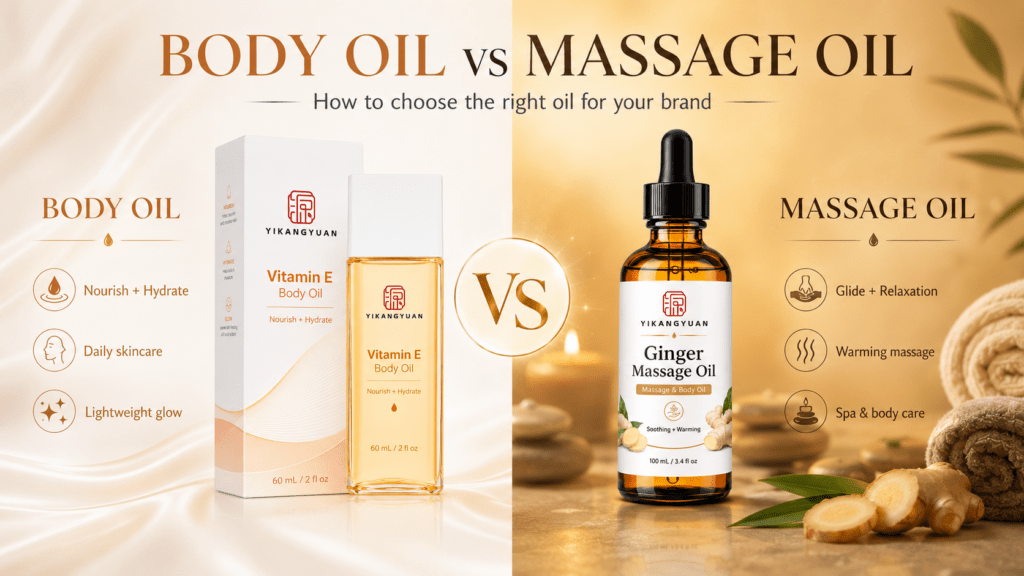
Как выбрать подходящее эфирное масло для вашего бренда
Если бы я помогал бренду выбирать между маслами для тела и массажными маслами, Я бы не стал начинать с трендовых ингредиентов.. Я бы начал с вопроса: Каково конкретное предназначение этого продукта в реальной жизни??
Выбирайте массажное масло, когда:
1. Средство предназначено для ежедневного ухода за телом.
2. Используется после душа.
3. Он фокусируется на сиянии и мягкости кожи.
4. Это продукт по уходу за телом, ориентированный на красоту.
5. Вы хотите, чтобы клиенты использовали его неоднократно
Когда бренд хочет подчеркнуть текстуру кожи, уход за телом, и повторить использование, масло для тела обычно является лучшим выбором. Особенно это актуально для брендов, которые уже продают скрабы для тела., лосьоны, или сыворотки. Масло для тела под частной торговой маркой кажется естественным следующим шагом — оно добавляет линейку продуктов премиум-класса, не меняя основную категорию бренда..
Выбирайте массажное масло, когда:
1. Продукт предназначен для использования в спа-салонах или салонах красоты.
2. Позиционируется как оздоровительный или ритуальный опыт.
3. Предназначен для домашнего массажа.
4. Требуется более продолжительное скольжение
5. Сенсорная релаксация – цель
Когда ощущения так же важны, как ощущения на коже, массажное масло – идеальный выбор. Именно здесь действительно сияют массажные масла от спа- и велнес-брендов.. Их составы созданы не только для смягчения кожи, но и для облегчения движений., повысить комфорт, и создай настроение. Быстрая абсорбция не является самой желательной характеристикой этих продуктов.. Состав должен оставаться на поверхности кожи достаточно долго, чтобы подействовать во время использования..
Выберите оба, когда:
Бренд достаточно силен, чтобы четко различать два вида использования.. Многие успешные бренды делают именно это: масло для тела для ежедневного использования и массажное масло для спа-процедур.. Это дополняющие друг друга продукты, которые служат различным моментам в жизни клиента..
Чем отличается рецептура
Здесь категории действительно начинают расходиться..
Люди оценивают масла для тела по тому, как они застывают., насколько удобно их носить, и будут ли они наносить их перед выходом на улицу или после того, как одеться. Люди оценивают массажные масла по тому, как долго они продолжают действовать, пока руки еще двигаются..
При приготовлении масла для тела, обратите внимание на:
-
Скорость поглощения
-
Уровень остатка
-
Распространяемость
-
Уровень свечения
-
Независимо от того, кажется ли финиш шелковистым или тяжелым
-
Подходит ли аромат для ношения на коже
При приготовлении массажного масла, обратите внимание на:
-
Длина скольжения
-
Поверхностная подушка
-
Как часто нужно повторно подавать заявку
-
Не затянется ли нефть слишком рано
-
Подходит ли аромат для ритуала релаксации
-
Подходит ли он для больших участков тела
По этой же причине не следует оценивать эти продукты по одним и тем же стандартам при отборе проб.. Быстрых ручных тестов недостаточно: для массажных масел большое значение имеет тестирование реального использования..
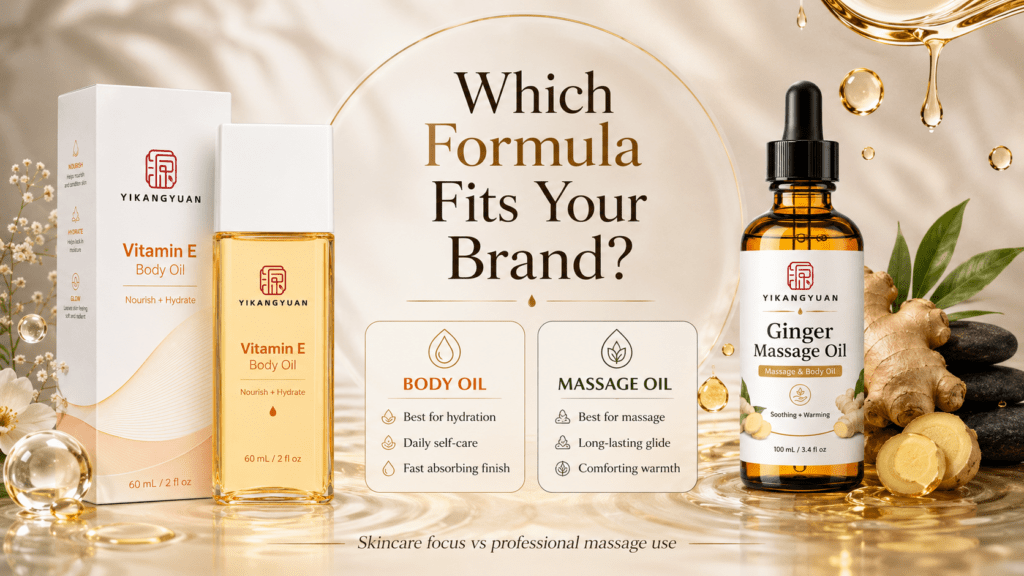
Аромат рассказывает всю историю
Стратегия ароматизации меняется в зависимости от того, производит ли бренд масло для тела под собственной торговой маркой или массажное масло под собственной торговой маркой..
Ароматы масел для тела действуют лучше всего, когда они ощущаются. косметический и носимый. Это могут быть мягкие цветочные оттенки., чистый и теплый, слегка сладкий, или сдержанный и элегантный. Они должны чувствовать, что принадлежат коже, о которой заботятся..
Массажные масла обычно служат другой цели.. Аромат часто должен сочетаться с ритуал. Возможно, запах будет более травяным., ботанический, успокаивающий, или как спа. Речь идет не о том, чтобы носить его весь день, а о том, как вы себя чувствуете в данный момент..
Эта разница может показаться небольшой, но это большая часть того, что делает масло для тела и массажное масло разными продуктами.. Если аромат не соответствует моменту, продукт может начать казаться непоследовательным.
Что это значит для вашего бренда
Выбор между маслом для тела и массажным маслом не зависит от того, какое из них лучше. “лучше.” Речь идет о том, какой из них подходит позиционирование вашего бренда и потребности ваших клиентов.
Если вы хотите продавать продукт как часть ежедневного ухода за телом, выбрать масло для тела.
Если вам нужен продукт, поддерживающий сенсорный ввод, скользить, и более ритуальный опыт, выбрать массажное масло.
Если ваш бренд достаточно силен, чтобы четко различать оба варианта использования., выбери оба.
Я не думаю, что самые умные бренды в этой категории — это те, которые пытаются заставить одну формулу делать все.. Обычно они заранее решают, какой именно продукт они производят..
В Иканъюань, мы развиваем оба Масло для тела & Массажное масло рецептуры, адаптированные к конкретным потребностям вашего бренда. Наш собственный Профессионал Р&D Лаборатория можно создать все из легкого, от быстро впитывающихся масел для тела до насыщенных, массажные масла с длительным скольжением — качество и консистенция, обеспечиваемые более чем 20 многолетний опыт.
За пределами формулировки, мы предлагаем Пользовательская формула разработка, Индивидуальная упаковка дизайн, и полный Волосы & Продукция по уходу за телом услуги. Запускаете ли вы линию масел для тела премиум-класса или коллекцию профессиональных массажных масел., наш Частная торговая марка для волос & Уход за телом услуги созданы для того, чтобы воплотить ваше видение в жизнь.
Узнайте больше о Наша фабрика и наша приверженность Устойчивый & Естественные практики.
Связаться с нами чтобы обсудить, какое масло подходит для вашего бренда.
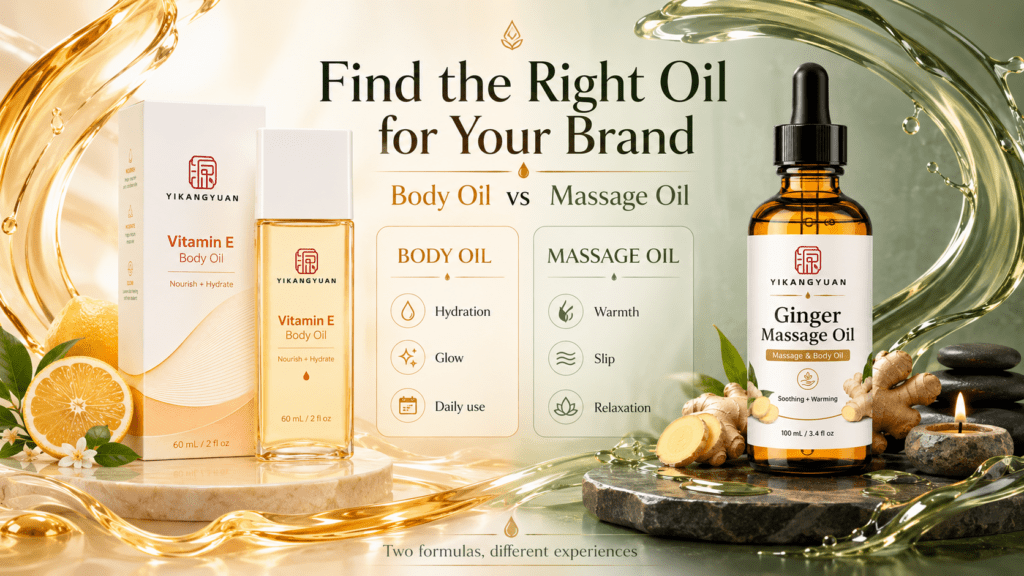
Часто задаваемые вопросы
1. В чем основная разница между маслом для тела и массажным маслом?
Масло для тела предназначено для ежедневного увлажнения кожи и относительно быстро впитывается.. Массажное масло предназначено для лечебного массажа., с большим скольжением и более медленным поглощением.
2. Можно ли использовать масло для тела для массажа?
Это не идеальный выбор. Масла для тела впитываются слишком быстро, поэтому вам придется применять их повторно на протяжении всего лечения.. Кроме того, они могут содержать ароматизаторы или активные ингредиенты, которые могут вызвать раздражение кожи во время длительного массажа..
3. Можно ли использовать массажное масло в качестве ежедневного увлажняющего крема??
Обычно не рекомендуется. Массажные масла более насыщенные и медленнее впитываются., что может сделать кожу жирной. Эфирные масла также могут быть слишком концентрированными для повседневного использования..
4. Какой из них следует развивать моему бренду?
Это зависит от вашего позиционирования. Роскошные бренды ежедневного ухода за кожей обычно выбирают масло для тела.. Спа- и велнес-бренды обычно выбирают массажное масло.. Многие успешные бренды предлагают и то, и другое..
- Что такое масло для тела?
- Распространенные ингредиенты масел для тела:
- Что такое массажное масло?
- Распространенные ингредиенты массажного масла:
- Масло для тела против массажного масла: Быстрое сравнение
Готовы запустить линию по уходу за волосами под собственной торговой маркой?
Пользовательские формулы, поддержка упаковки, контроль качества и экспортный сервис — все от одного опытного производителя.
