


Aceite corporal versus aceite de masaje: Encuentre el aceite adecuado para su marca
Supongamos que desea lanzar un producto a base de aceite, pero ¿cuál debería elegir?? aceite corporal? O aceite de masaje? Aunque las botellas pueden parecer similares, sus usos son completamente diferentes.
Comprender la diferencia entre aceite corporal y aceite de masaje no sólo es útil: es esencial para cualquier marca que desarrolle una línea de cuidado corporal. Aceite corporal versus aceite de masaje puede compartir el mismo formato base, pero están construidos para diferentes momentos, diferentes usuarios, y diferentes expectativas. Esto es lo que necesita saber antes de formular.
¿Qué es el aceite corporal??
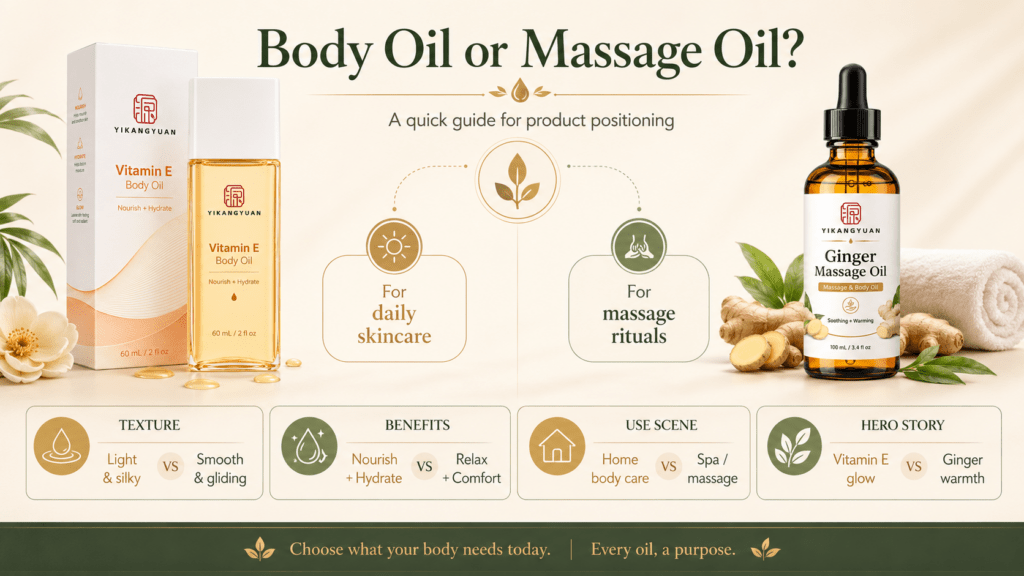
El aceite corporal es un producto para el cuidado diario de la piel. La gente lo compra para suavizar su piel., sentirse mejor después de la ducha, y lucir mejor. Debe usarse con regularidad, después de la ducha., antes de acostarse, o cuando la piel necesite un impulso de hidratación.
Los aceites corporales suelen tener un textura ligera a media y absorber a un ritmo constante. Se centran en la salud de la piel.: hidratación, soporte de barrera, y un brillo saludable. El objetivo no es sólo hidratar, sino hacer que el usuario quiera seguir usándolo..
Ingredientes comunes de los aceites corporales:
| Ingrediente | Beneficio |
|---|---|
| aceite de jojoba | Imita el sebo natural de la piel., ligero |
| Aceite de girasol | textura sedosa, rico en vitamina E |
| aceite de semilla de uva | Ligero, alto en ácido linoleico |
| aceite de argán | nutritivo, reblandecimiento |
| Aceite de espuma de pradera | Añade estabilidad y una sensación suave. |
| vitamina e | antioxidante, apoya la barrera cutánea |
Si se siente demasiado pesado, demasiado lento, o demasiado pegajoso, deja de funcionar como un producto moderno para el cuidado del cuerpo. Esto podría funcionar para un aceite de invierno que sólo usan unas pocas personas., pero si una marca quiere vender todo el año, ese no es el enfoque correcto.
¿Qué es el aceite de masaje??
El aceite de masaje es un herramienta profesional—no es un humectante diario. Está diseñado para un propósito: para facilitar la suavidad, Movimiento sin fricción durante la terapia de masaje..
Los aceites de masaje tienen una más grueso, textura más rica y absorber despacio—Deben permanecer en la piel el tiempo suficiente para una sesión de masaje completa sin una nueva aplicación constante.. La pregunta principal no es sólo cómo se siente la piel después. Así es como funciona la fórmula mientras la usas.
Si un aceite de masaje se absorbe demasiado rápido, el masaje se detiene. El usuario siente arrastre inmediatamente.. Si el aroma no crea una atmósfera relajante, toda la experiencia se siente más débil de lo que debería ser.
Ingredientes comunes del aceite de masaje:
| Ingrediente | Beneficio |
|---|---|
| aceite de almendras dulces | Excelente deslizamiento, nutritivo |
| Aceite de coco fraccionado | Estable, deslizamiento duradero |
| aceite de semilla de uva | Ligero, buen deslizamiento |
| aceite de jojoba | Equilibra la absorción y el deslizamiento. |
| aceite de aguacate | Rico, nutritivo para pieles secas |
| aceites esenciales | Beneficios terapéuticos (lavanda para la calma, eucalipto para estimulación) |
Aceite corporal versus aceite de masaje: Una comparación rápida
| Aspecto | Aceite Corporal | Aceite de masaje |
|---|---|---|
| Propósito principal | Hidratación y nutrición diaria de la piel. | Facilitar la terapia de masaje. |
| Textura | Ligero a medio | más grueso, más rico |
| Absorción | Se absorbe relativamente rápido | Se absorbe lentamente |
| Deslizamiento/deslizamiento | Moderado | Alto, de larga duración |
| Fragancia | Cosmético, usable | Terapéutico, tipo spa |
| Lo mejor para | Rutina diaria de cuidado de la piel | Balnearios, salas de estar, uso profesional |
| Momento del usuario | despues de la ducha, hidratación diaria | Masaje a domicilio, spa, ritual de relajación |
Cómo elegir el aceite esencial adecuado para su marca
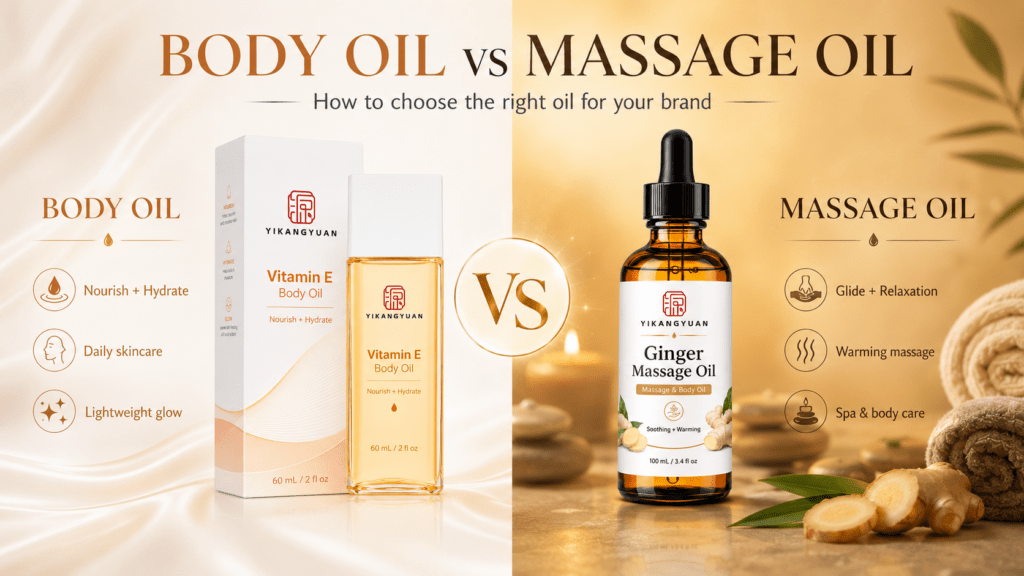
Si tuviera que ayudar a una marca a elegir entre aceites corporales y aceites para masajes, No empezaría con ingredientes de moda.. comenzaría preguntando: ¿Cuál es exactamente el propósito previsto de este producto en la vida real??
Elija aceite de masaje cuando:
1. El producto está destinado al cuidado corporal diario.
2. Se utiliza después de la ducha.
3. Se centra en la luminosidad y suavidad de la piel.
4. Es un producto para el cuidado del cuerpo con énfasis en la belleza.
5. Quieres que los clientes lo utilicen repetidamente
Cuando una marca quiere enfatizar la textura de la piel, cuidado del cuerpo, y repetir el uso, El aceite corporal suele ser la mejor opción.. Esto es especialmente cierto para las marcas que ya venden exfoliantes corporales., lociones, o sueros. Un aceite corporal de marca privada parece el siguiente paso natural: agrega una línea de productos premium sin alterar la categoría principal de la marca..
Elija aceite de masaje cuando:
1. El producto está destinado a su uso en spas o salones de belleza.
2. Se posiciona como una experiencia de bienestar o ritual.
3. Está destinado al masaje en casa.
4. Se requiere un deslizamiento más duradero
5. La relajación sensorial es el objetivo.
Cuando la experiencia es tan importante como la sensación en la piel, El aceite de masaje es la opción ideal.. Aquí es precisamente donde realmente brillan los aceites de masaje de marcas de spa o bienestar.. Sus formulaciones están diseñadas no sólo para suavizar la piel sino también para facilitar los movimientos., mejorar la comodidad, y crear el ambiente. La rápida absorción no es la característica más deseable para estos productos.. La formulación debe permanecer en la superficie de la piel el tiempo suficiente para que surta efecto durante su uso..
Elija ambos cuando:
La marca es lo suficientemente fuerte como para distinguir claramente entre los dos usos.. Muchas marcas exitosas hacen exactamente eso: un aceite corporal para uso diario y un aceite de masaje para la experiencia del spa.. Son productos complementarios que sirven para diferentes momentos de la vida del cliente..
En qué se diferencia la formulación
Aquí es donde las categorías realmente comienzan a divergir.
La gente juzga los aceites corporales por cómo se fijan., lo cómodos que se sienten al usarlos, y si se los aplicarían antes de salir o después de vestirse. La gente juzga los aceites de masaje por cuánto tiempo siguen funcionando mientras las manos todavía están en movimiento..
Al formular aceite corporal., prestar atención a:
-
Velocidad de absorción
-
Nivel de residuos
-
Capacidad de extensión
-
Nivel de brillo
-
Si el acabado se siente sedoso o pesado
-
Si la fragancia se siente adecuada para usarla en la piel.
Al formular aceite de masaje., prestar atención a:
-
Longitud de planeo
-
Cojín de superficie
-
¿Con qué frecuencia necesitas volver a aplicar?
-
Si el petróleo disminuye demasiado pronto
-
Si la fragancia se adapta a un ritual de relajación
-
Si funciona bien para áreas más grandes del cuerpo
Esta es también la razón por la que no debes juzgar estos productos con los mismos estándares al tomar muestras.. Las pruebas manuales rápidas no son suficientes: las pruebas de uso real son muy importantes para los aceites de masaje.
La fragancia cuenta toda la historia
La estrategia de fragancias cambia dependiendo de si una marca fabrica aceite corporal de marca privada o aceite de masaje de marca privada..
Las fragancias de aceites corporales funcionan mejor cuando se sienten cosmético y ponible. Pueden ser florales suaves., limpio y cálido, ligeramente dulce, o sobrio y elegante. Deben sentir que pertenecen a la piel que se está cuidando..
Los aceites de masaje suelen tener un propósito diferente. El aroma a menudo necesita ir con un ritual. Puede que huela más a hierbas., botánico, calmante, o como un spa. No se trata de usarlo todo el día, se trata de cómo te hace sentir en ese momento..
Esta diferencia puede parecer pequeña, pero es una gran parte de lo que hace que el aceite corporal y el aceite de masaje sean productos diferentes.. Si la fragancia no coincide con el momento, el producto puede comenzar a sentirse inconsistente.
Qué significa esto para su marca
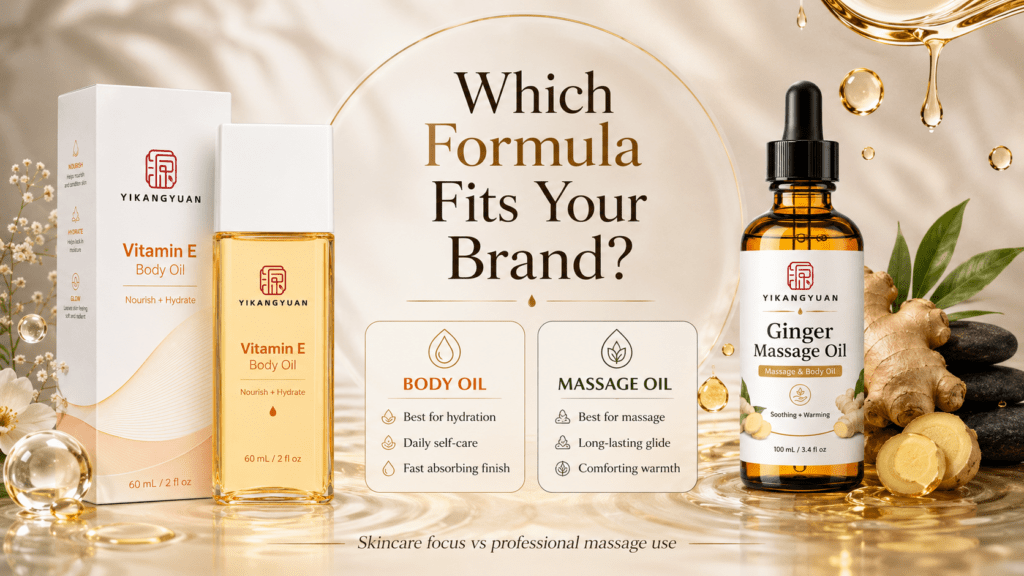
Elegir entre aceite corporal y aceite para masajes no se trata de cuál es “mejor.” Se trata de cuál encaja El posicionamiento de su marca y las necesidades de sus clientes..
Si quieres vender un producto como parte del cuidado corporal diario., elegir aceite corporal.
Si necesita un producto que admita el tacto, planeo, y una experiencia más ritualista, elegir aceite de masaje.
Si tu marca es lo suficientemente fuerte como para distinguir claramente ambos usos, elige ambos.
No creo que las marcas más inteligentes en esta categoría sean las que intentan que una fórmula lo haga todo.. Por lo general, deciden desde el principio exactamente qué tipo de producto están fabricando..
En Yikangyuan, desarrollamos ambos Aceite Corporal & Aceite de masaje formulaciones adaptadas a las necesidades específicas de su marca. Nuestro interno Profesional R&Laboratorio D puede crear de todo, desde peso ligero, aceites corporales de rápida absorción hasta ricos, Aceites de masaje de largo deslizamiento, todos con la calidad y consistencia que provienen de más 20 años de experiencia.
Más allá de la formulación, ofrecemos Fórmula personalizada desarrollo, Embalaje personalizado diseño, y lleno Cabello & Producción de cuidado corporal servicios. Ya sea que esté lanzando una línea de aceites corporales premium o una colección de aceites para masajes profesionales, nuestro Cabello de marca privada & Cuidado del cuerpo Los servicios están diseñados para hacer realidad su visión..
Más información sobre Nuestra fábrica y nuestro compromiso con Sostenible & Prácticas Naturales.
Contáctenos para discutir qué aceite es el adecuado para su marca.
Preguntas frecuentes
1. ¿Cuál es la principal diferencia entre el aceite corporal y el aceite de masaje??
El aceite corporal está diseñado para la hidratación diaria de la piel y se absorbe relativamente rápido.. El aceite de masaje está diseñado para masajes terapéuticos., con más deslizamiento y absorción más lenta.
2. ¿Puedo usar aceite corporal para masajes??
Esta no es la opción ideal. Los aceites corporales se absorben demasiado rápido, por lo que deberás volver a aplicarlos repetidamente durante todo el tratamiento. Además, pueden contener fragancias o ingredientes activos que podrían irritar la piel durante un masaje prolongado.
3. ¿Puedo usar aceite de masaje como humectante diario??
Generalmente no recomendado. Los aceites de masaje son más ricos y de absorción más lenta., que puede dejar la piel con una sensación grasosa. Los aceites esenciales también pueden estar demasiado concentrados para el uso diario..
4. ¿Cuál debería desarrollar mi marca??
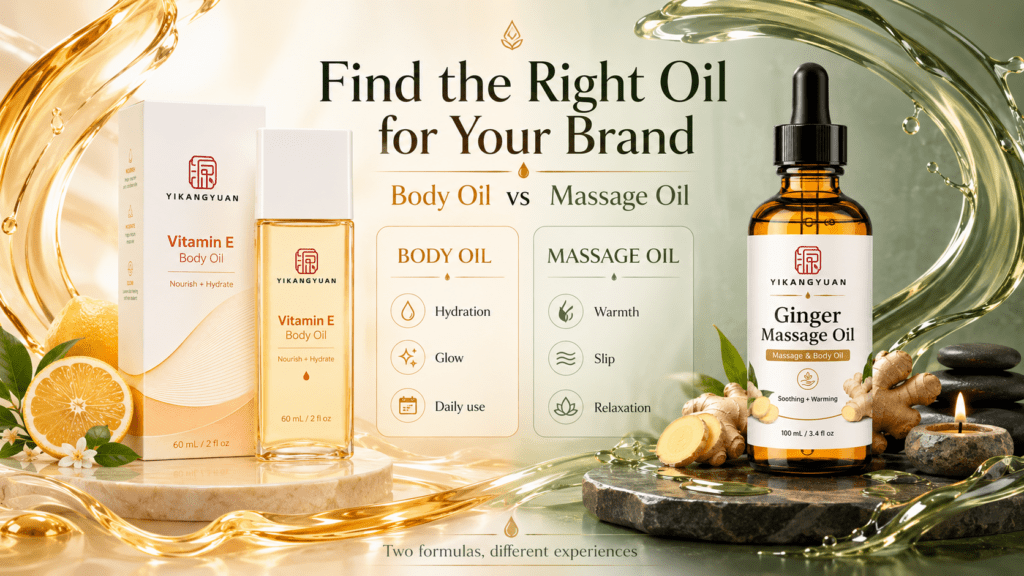
Depende de tu posicionamiento. Las marcas de lujo para el cuidado de la piel diario suelen elegir aceites corporales. Las marcas de spa y bienestar suelen elegir aceites para masajes. Muchas marcas exitosas ofrecen ambos.
- ¿Qué es el aceite corporal??
- Ingredientes comunes de los aceites corporales:
- ¿Qué es el aceite de masaje??
- Ingredientes comunes del aceite de masaje:
- Aceite corporal versus aceite de masaje: Una comparación rápida
Listo para lanzar su línea privada de cuidado del cabello?
Fórmulas personalizadas, soporte de embalaje, control de calidad y servicio de exportación, todo de un solo fabricante experimentado.
