


Guide définitif: Beurre corporel vs crème pour le corps vs lotion pour le corps
Entrez dans n’importe quelle allée de soins du corps et vous verrez des étagères bordées de lotions, crèmes, et les beurres. They all promise to leave skin soft and hydrated—but they’re not the same.
Comprendre la différence entre body butter vs body cream vs body lotion is essential for any brand looking to develop a body care line that actually meets customer needs. Each product serves a different purpose, works for different skin types, and delivers a different experience. A wrong choice can leave consumers feeling that a product is too heavy or too light—or simply unsuited to their skin.
Here’s what you need to know about each one—and how to choose the right formulation for your brand.
The Simple Difference: It’s All About Water and Oil
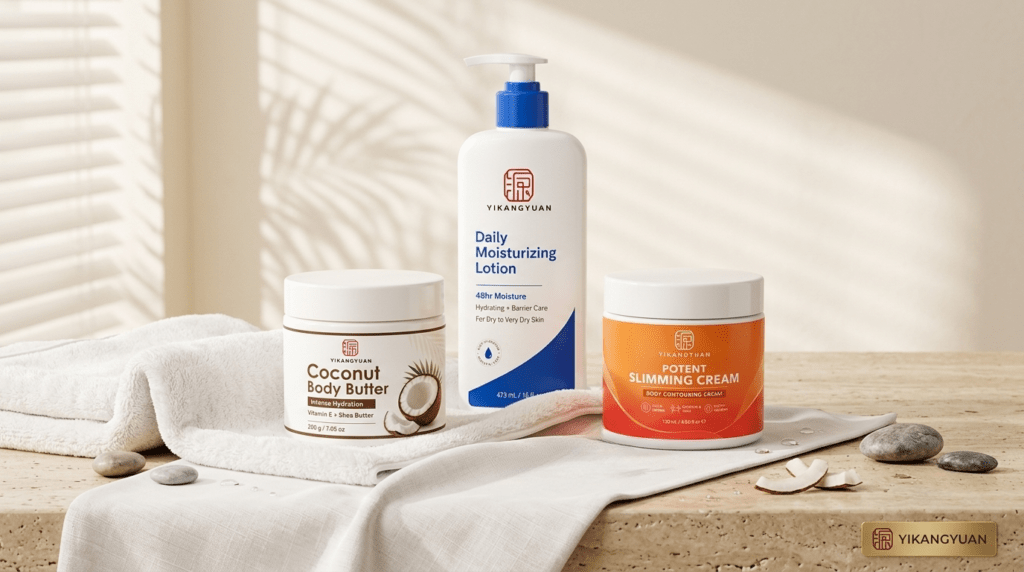
The fundamental difference between body lotion, crème pour le corps, and body butter comes down to one thing: the water-to-oil ratio.
Think of it as a spectrum: at one end are products with high water content and low oil content—light in texture, quick to absorb, and barely noticeable on the skin. At the other end are products with very low (or no) water content and high oil content—rich and thick in texture, offering deep nourishment.
Here is a breakdown of the differences between these three types of products:
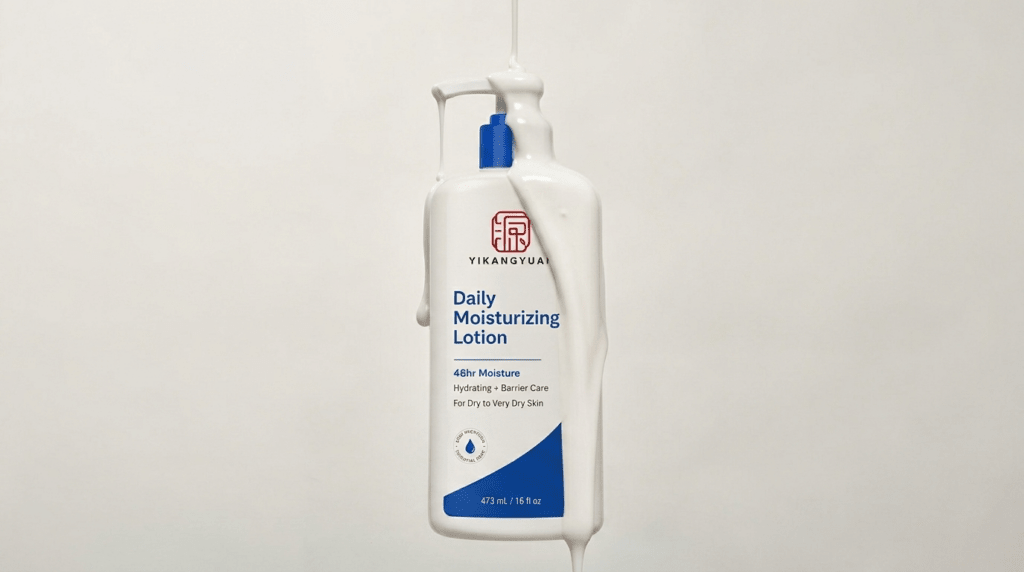
Lotion pour le corps is the lightest option. With the highest water content and lowest oil content, it absorbs quickly, leaving the skin feeling fresh rather than greasy. It is an ideal choice for daily care—easy to apply all over the body and quick to dry, making it perfect for those who do not want to wait around before getting dressed.
Body cream sits in the middle. It balances moisture and oil, offering deeper hydration than lotion while still allowing the skin to breathe. With a richer, more nourishing texture, body cream is more effective at addressing rough skin and dryness or flaking.
Body butter is the richest option. Many body butters contain little to no water, consisting instead primarily of highly concentrated plant-based fats and oils. These products feature a luxurious, dense texture that melts instantly upon contact with the skin, providing intense, long-lasting hydration.
Lotion pour le corps: Lightweight Everyday Hydration
Idéal pour: Normal to oily skin, warm weather, daily use
Body lotion is the most common body moisturizer on the market. Its formula is primarily water-based (typically 70%–80% water), supplemented by humectants like glycerin and small amounts of oils or lipids.
Thanks to its high water content, body lotion absorbs quickly, leaving virtually no sticky feel or residue. It is an ideal choice if you want hydration without any heavy or greasy sensation.
When to choose body lotion:
-
For customers with normal to oily skin
-
For hot, humid climates where lighter textures are preferred
-
For daily, all-over application
-
For customers who want fast absorption and no waiting time
The trade-off: Because lotions are mostly water, they don’t provide the same level of long-lasting moisture as creams or butters. Once the water evaporates, the moisturizing effect may be relatively short-lived.
Crème pour le corps: Balanced Nourishment
Idéal pour: Normal to dry skin, year-round use, cooler weather
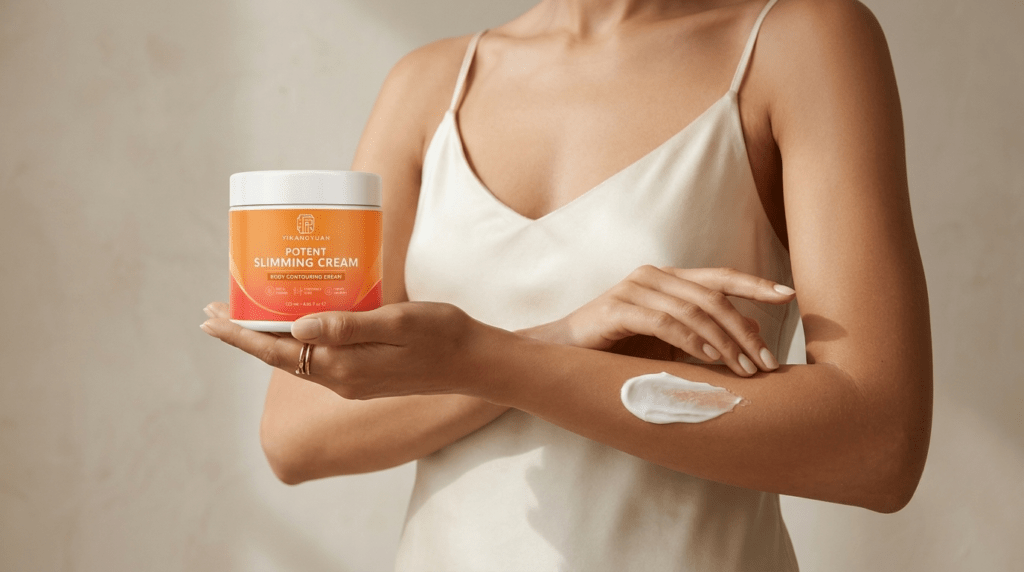
Body cream strikes a balance between moisture and oil. Compared to body lotions, they contain less water and higher levels of oils and emollients, resulting in a thicker, texture plus riche.
Creams are formulated with ingredients like shea butter, cocoa butter, and plant oils to provide deeper hydration and help repair the skin barrier. Their texture effectively moisturizes dry skin without feeling overly heavy or greasy.
When to choose body cream:
-
For customers with normal to dry skin
-
For year-round use, especially in cooler months
-
For areas prone to dryness like elbows, genoux, and hands
-
When your customer wants deeper hydration than a lotion can provide
The trade-off: Body creams typically absorb more slowly than body lotions. Customers who prefer lightweight textures might find them slightly too heavy for use during hot weather or the daytime.
Beurre corporel: Intensive Moisture for Very Dry Skin
Idéal pour: Very dry, rugueux, or flaky skin, nighttime use, winter
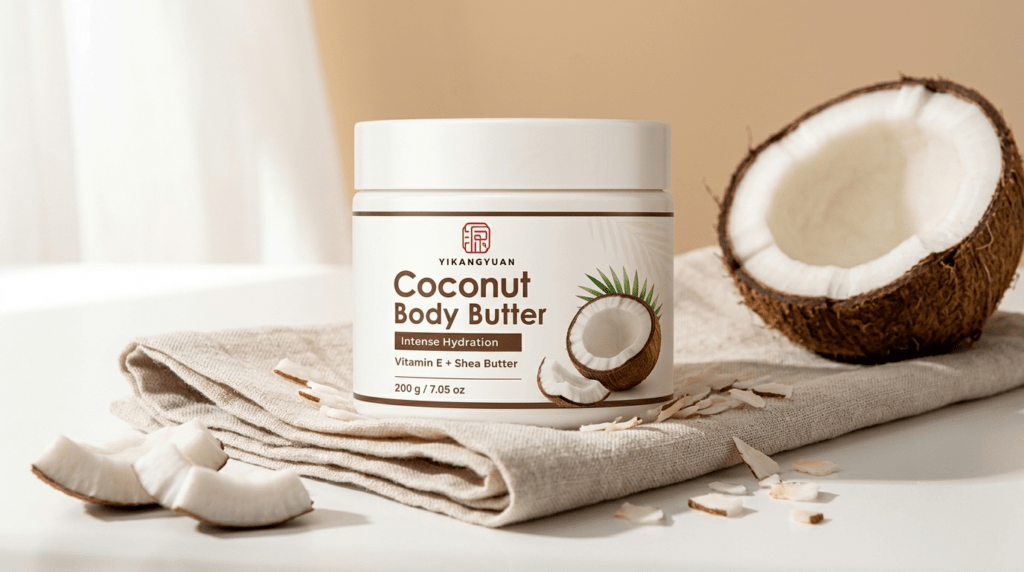
Body butter is the heavyweight champion of body moisturizers. Many body butters feature a water-free (anhydrous) formule, relying primarily on high concentrations of plant-based butters (such as shea, cocoa, and mango butter) et huiles botaniques.
The result is a dense, solid product that softens upon contact with the skin and provides deep, long-lasting nourishment. Body butters are particularly effective at creating an occlusive barrier, effectively locking in moisture and preventing water loss.
When to choose body butter:
-
For customers with very dry, rugueux, or flaky skin
-
For winter months when skin is most vulnerable
-
For targeted use on extra-dry areas like elbows, genoux, and feet
-
For nighttime moisturizing routines
The trade-off: Body butter has a rich texture and may feel greasy. It absorbs slowly, so it may not be suitable for oily skin or for daytime routines where you need to get dressed quickly after application.
How to Choose: Beurre corporel vs crème pour le corps vs lotion pour le corps
When developing a body care product line, the question isn’t which product is “better.” It’s about matching the right product to the right customer need.
Here’s a quick reference guide:
| Skin type | Recommended product |
|---|---|
| Oily or combination skin | Lotion pour le corps – hydrates without feeling heavy |
| Normal to dry skin | Crème pour le corps – balanced nourishment for everyday use |
| Very dry, floconneux, or sensitive skin | Beurre corporel – intensive moisture and barrier repair |
Seasonal factors should also be considered. Lightweight lotions are generally better suited for summer, while richer body creams and body butters are preferred in winter when skin is prone to dryness.
Many brands choose to offer all three—a lightweight lotion for daily use, a cream for deeper hydration, and a butter for intensive care. This approach allows customers to choose based on their skin’s needs and the season, and it builds a more complete brand portfolio.
How Yikangyuan Can Help You Build Your Body Care Line
À Yikangyuan, we help brands create body care products that combine a luxurious skin feel with superior moisturizing benefits and strong market appeal. Whether you envision a whipped body butter, a fast-absorbing body cream, or a botanical-infused moisturizing lotion, we provide the technical expertise and manufacturing support needed to turn your concept into a finished product.
Notre Cheveux de marque privée & Soins du corps les services comprennent:
-
Formule personnalisée development with different texture profiles—from rich and buttery to smooth and lightweight
-
Emballage personnalisé options including cream jars, squeeze tubes, pump bottles, and travel-size packs
-
Complet Cheveux & Production de soins du corps capabilities with GMPC & Installations certifiées ISO
-
Fiable Expédition & Logistique et dédié Assistance après-vente
Notre Professionnel R&Laboratoire D can help you adjust thickness, spreadability, sensation d'absorption, fragrance intensity, and after-feel, so your finished product matches your brand positioning and customer preferences.
Nous vous avons invité à en savoir plus sur Notre usine et notre engagement à Durable & Pratiques naturelles. Vous avez des questions? Consultez notre FAQ ou Contactez-nous pour discuter de votre projet.
Foire aux questions
1. What’s the main difference between body lotion, crème pour le corps, and body butter?
The key difference is the water-to-oil ratio. Lotions have the most water and least oil (lumière, absorption rapide). Creams are balanced. Butters have little to no water and the most oil (riche, intensive, longue durée).
2. Which one is best for dry skin?
Body butter is best for very dry or flaky skin. Body cream works well for normal to dry skin. Lotion pour le corps is better for normal to oily skin.
3. Can I use body butter on my face?
Généralement déconseillé. Body butters are rich and can clog facial pores, especially if they contain cocoa butter. They’re formulated for the thicker skin on the body.
4. Which product absorbs fastest?
Lotion pour le corps absorbs fastest because of its high water content. Creams take a bit longer, and butters take the longest.
5. Should my brand offer all three?
Many successful brands offer all three to serve different customer needs and seasons. Offering a range allows customers to choose based on their skin type and preference, and it builds a more complete brand portfolio.
- The Simple Difference: It’s All About Water and Oil
- Lotion pour le corps: Lightweight Everyday Hydration
- Crème pour le corps: Balanced Nourishment
- Beurre corporel: Intensive Moisture for Very Dry Skin
- How to Choose: Beurre corporel vs crème pour le corps vs lotion pour le corps
Prêt à lancer votre ligne de soins capillaires de marque privée?
Formules personnalisées, support d'emballage, service de contrôle de qualité et d'exportation - le tout d'un seul fabricant expérimenté.
